Why this question comes up: the physics
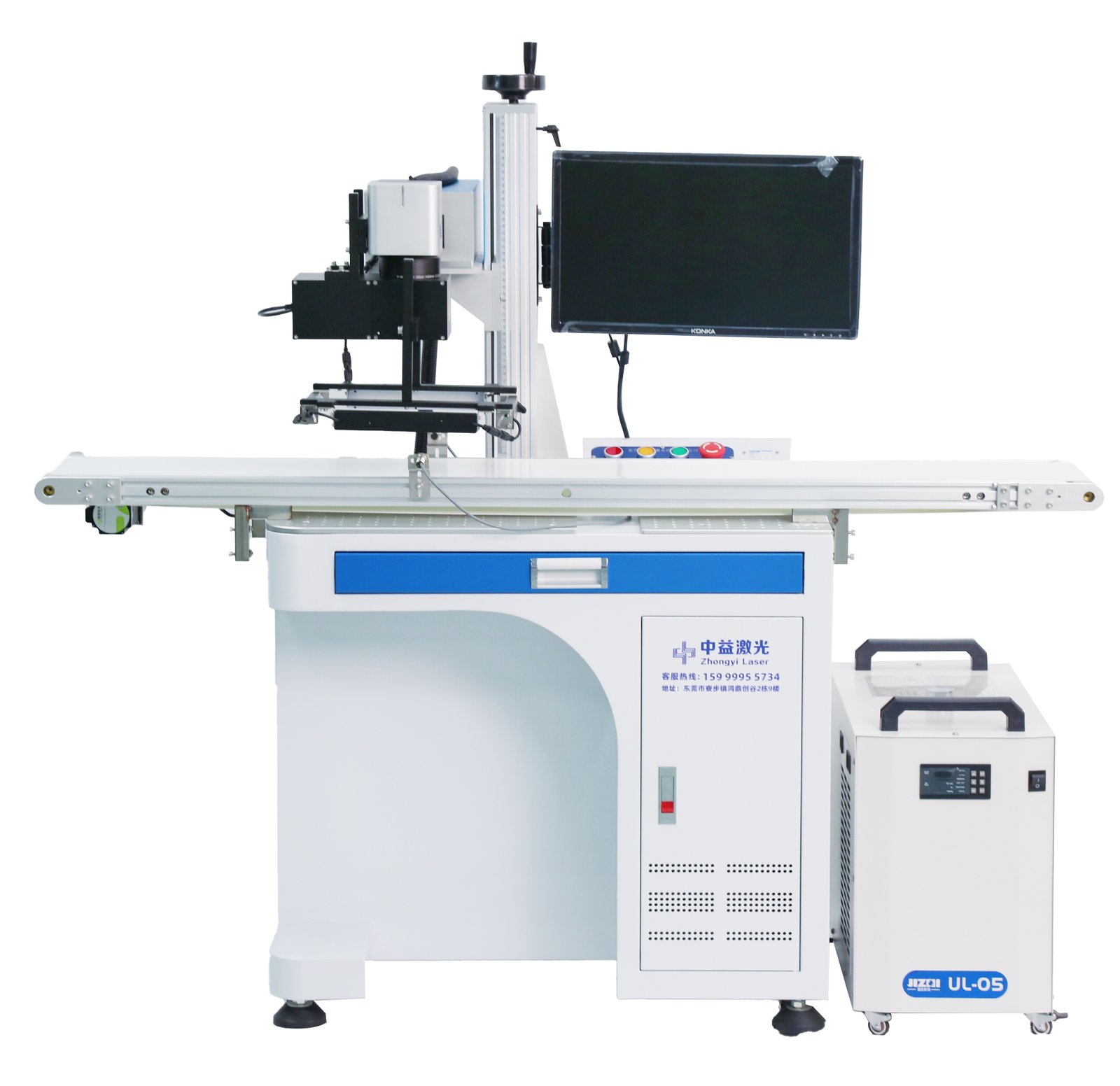
A CCD vision marker calibrates the camera, then uses template matching to capture each part's actual coordinates and rotation theta, feeding both offset and angle into the marking coordinate system. Parts placed skewed or at random still receive a square mark, which removes the need for custom fixtures. Our vision platform locates to plus or minus 0.05 mm and can image once, locate every part on the tray and then mark continuously.
The answer and the process detail
Yes. One image is taken and the vision system solves the coordinates of every part on the tray, then the head marks them in sequence - much faster than aligning each piece. Accuracy depends on camera resolution and calibration quality; our vision platform locates to plus or minus 0.05 mm. If parts sit at different heights, confirm the depth of field covers them, or image the tray in zones.
How to set it up and verify it
Recognition runs in milliseconds and is rarely the bottleneck - marking time and load-unload cycle dominate. There is no fixed calendar interval for calibration: recalibrate after every changeover or any adjustment to camera or fixture, and in normal production check with a standard part once per shift or week to confirm deviation stays within plus or minus 0.05 mm. Reflective, transparent or feature-poor parts need the grip strategy agreed first, and heavy overlap calls for singulation on the feed side.
Selection and delivery
It suits random part presentation, mixed-model lines and cases where defects must be detected and skipped automatically. Vision can also combine inspection with marking: apply rules on dimensions or features, skip anything that fails and output a reject signal. The criteria must be measurable - vague cosmetic defects have to be trained on samples and the false-reject rate agreed. Full positioning accuracy and camera options are on the CCD Vision Laser Marking Machine page.
Procurement Q&A
Standard machines ship in 7 days; rush orders in 3–5 days; custom non-standard builds in 15–30 days. Before production we confirm drawings, process and sample results to avoid rework.
18-month warranty on the machine. Core parts like the laser source and galvo are replaceable standard parts with long-term supply, so repairs and swaps are documented.
Yes. Send a sample and we return a real test video within 24 hours and ship the part back. Key models get a 48-hour aging test, so you see the actual result on your own workpiece before deciding.
Open Mo–Su 08:00–23:00 (GMT+8) with English support. Reach us at +86 159 9995 5734, WhatsApp +86 190 9874 6815 or Laurie@laserdg.com. Machines are packed to export standards.
We have 3+ engineers, 7+ authorised patents and 5000+ units shipped. Standard parts like laser source and galvo are stocked long-term for predictable replenishment.
Price depends on the model (UV / fiber / CO₂), power, laser-source brand (Raycus / JPT / IPG) and configuration (galvo, field lens, control software). Zhongyi Laser lists the exact laser-source and galvo models on the quote and in the contract, so the configuration is verifiable and easy to reorder or replace later.
Yes. One image is taken and the vision system solves the coordinates of every part on the tray, then the head marks them in sequence - much faster than aligning each piece. Accuracy depends on camera resolution and calibration quality; our vision platform locates to plus or minus 0.05 mm. If parts sit at different heights, confirm the depth of field covers them, or image the tray in zones.
That is exactly what vision marking is for. The camera is calibrated, template matching captures each part's actual position and rotation, the offset is handed to the marking coordinate system, and the galvo follows. Our vision platform locates to plus or minus 0.05 mm and can pick up multiple parts in one shot. The precondition is a stable surface feature - highly reflective, transparent or feature-poor parts need the grip strategy agreed with an engineer first.
Vision recognition runs in milliseconds and is rarely the bottleneck; marking time and load-unload cycle usually dominate. Our vision platform takes one image and locates every part on the tray, then marks continuously instead of re-aligning per part. Heavy overlap reduces the recognition rate, in which case simple singulation on the feed side is needed. Give us the target cycle time and the engineer will confirm feasibility for your actual conditions.