The hidden cost of traditional marking
- —Mechanical scribing / dot peen: a hardened stylus presses into the surface. Slow, and a deformation risk on thin-wall or precision parts. The stylus is a consumable.
- —Chemical etching / screen printing: acids or inks, with the environmental and hazardous-waste handling that comes with them. Many steps, slow changeover.
- —Hot stamping / thermal transfer: the ribbon is a continuous consumable; heat is unfriendly to some materials; the mark wears with abrasion.
- —Inkjet / labels: ink and label stock are consumables; alcohol, abrasion and heat lift them; small characters clog.
All four share one trait: every mark consumes material. The larger the volume, the larger the spend — and quality drifts as nozzles and styli wear, so the last parts are never the best ones.
What laser marking gives back
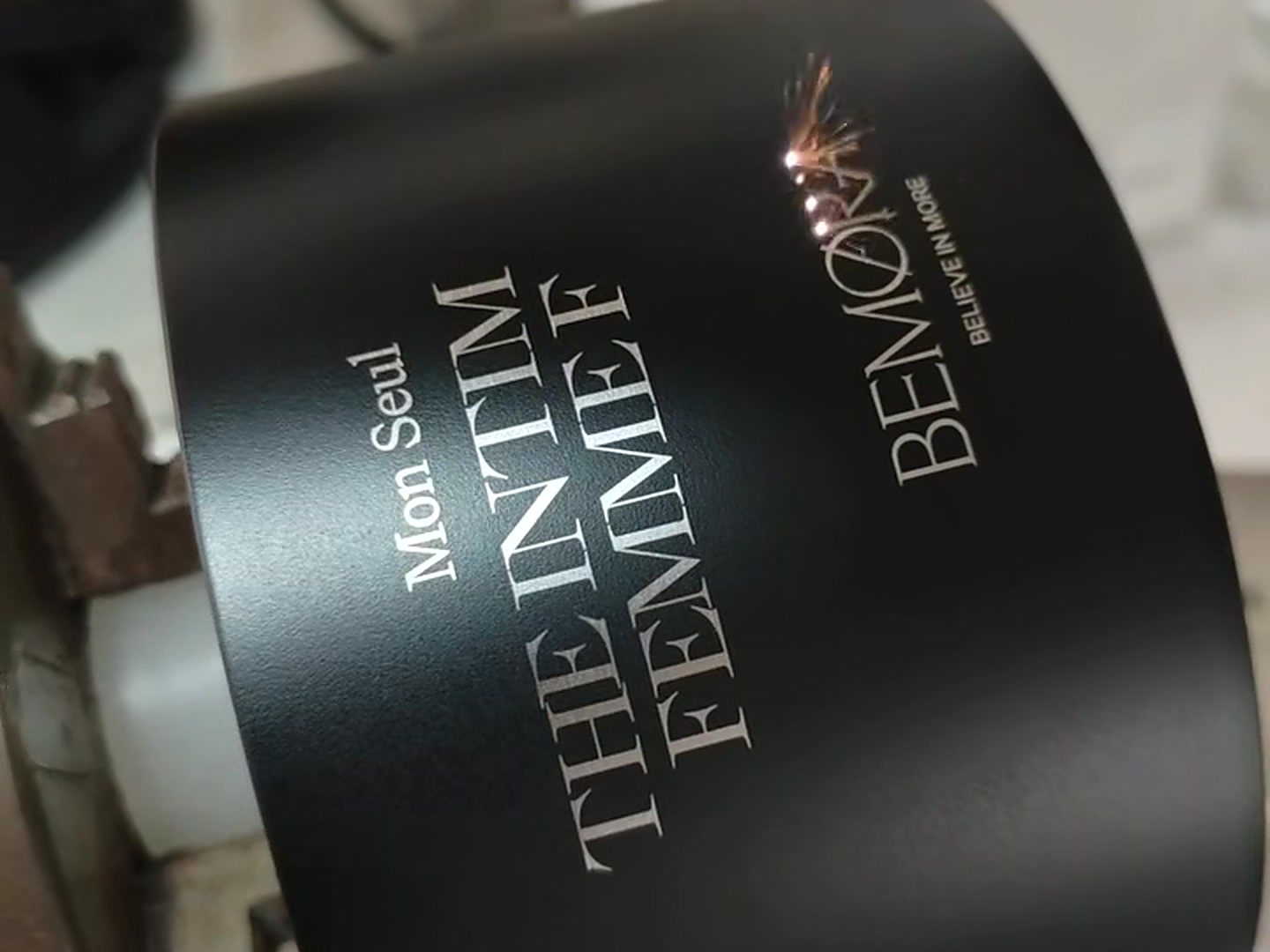
- —Non-contact: thin-wall, precision and already-assembled parts are all fair game.
- —No consumables: apart from wear lenses, there is no ongoing ink, ribbon or label cost.
- —Permanent: the mark is a change in the material itself — abrasion, solvent and temperature resistant.
- —Variable data: serial numbers, QR codes, batches and dates differ per part; changing data needs no new tooling.
- —Fast changeover: swap a file in software. No plate-making step between sample and mass production.
- —Fine detail: a focused spot of tens of microns supports small characters and dense QR codes.
Side by side
| Dimension | Traditional marking | Laser marking |
|---|---|---|
| Consumables | Ink / ribbon / labels / stylus, ongoing | None; wear lenses only |
| Durability | Degrades with abrasion, solvent, heat | Lifetime of the part |
| Changeover | New plate or fixture, hours | New file, minutes |
| Precision | Limited by nozzle / stylus size | Focused spot of tens of microns |
| Environment | Chemicals and hazardous waste | No chemical input |
| Cost per part | Fixed consumable cost, hard to amortise | Amortises with volume |
| Contact | Contacts the part; can damage it | Non-contact |
When laser is the wrong tool
- —Multi-colour printed artwork (colour logos, gradients): laser changes the material or removes a coating; it cannot produce arbitrary colour. Use UV printing or screen printing.
- —Large solid fills: laser scans point by point, so filling big areas is slow. Printing wins.
- —Very thin, very soft or highly reflective materials: validate on a sample first to avoid burnt edges or reflected-beam damage.
- —Transparent materials: the wrong wavelength simply will not mark. Use UV, and confirm contrast on a sample.
The most common question deserves a straight answer: laser is not universal. Its strength is permanent, variable, consumable-free marking over small areas. Large colour graphics still belong to printing.
Deciding whether to switch
You do not need an ROI model first. Send us a sample: a test-marking video within 24 hours, and the sample back. Compare contrast, depth, feel and durability on your own part — wipe it with alcohol, scratch it with a fingernail — then decide.
The same applies once a machine is already on your floor. The real barrier was never the hardware; it is dialling the parameters into your material. That part is our job.