Start with material — it decides wavelength
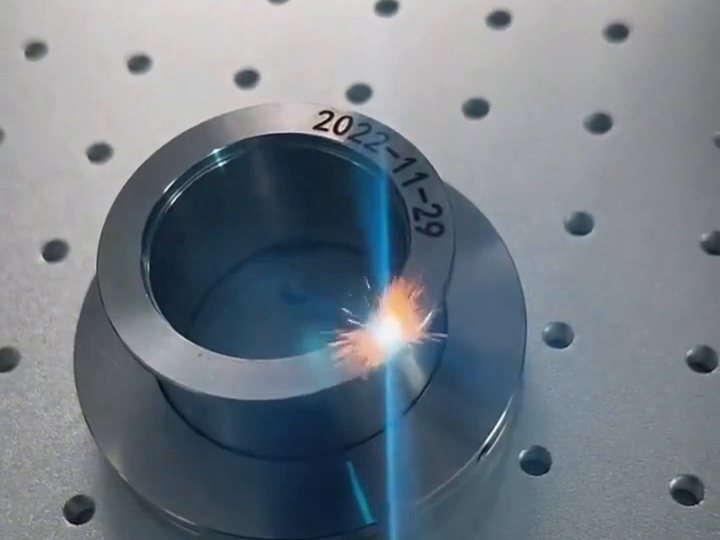
The first variable in laser marking is wavelength, not wattage. The same material can absorb 1064nm, 355nm and 10.6µm at vastly different rates. So step one is confirming what your part is made of and what mark you need. Metals like stainless steel, aluminium and copper absorb 1064nm best, so a fiber laser marker is the fit. Heat-sensitive glass, crystal, PC and ABS prefer the clean 355nm UV cold process. Organics like wood, leather and paper belong to the 10.6µm CO₂ laser marker.
Then the process — which effect you need
Surface marking (logo, serial, QR code) is possible on almost any machine; focus on speed and accuracy. Deep engraving and cutting (moulds, hardware) need higher power and a better galvo, where fiber leads. Colour marking is oxide colour on stainless via MOPA parameters, not ink. Fine text and micro-holes (pharma, electronics) call for UV, with the smallest heat-affected zone. One machine with different parameters switches between white, black and colour marks on metal — which is why the most useful test is a speed-vs-quality comparison on your own part.
Why two machines at the same wattage differ
Two machines with near-identical prices can mark very differently, and the gap is in four parts: the laser source (Raycus / JPT / IPG by budget), the galvo (speed and precision), the field lens (marking area) and the control software (job-switching speed). Zhongyi Laser lists the exact laser-source and galvo models on the quote and in the contract — verifiable, and easier to reorder or replace later.
Three buying mistakes to avoid
First, asking only how many watts — galvo and field lens matter as much for speed and edge quality. Second, trusting showroom samples as production proof — check 8-hour continuous stability and consistency. Third, ignoring service and spares — laser source and galvo are replaceable parts, so confirming long-term supply matters more than the headline price.
Procurement Q&A
Price depends on the model (UV / fiber / CO₂), power, laser-source brand (Raycus / JPT / IPG) and configuration (galvo, field lens, control software). Zhongyi Laser lists the exact laser-source and galvo models on the quote and in the contract, so the configuration is verifiable and easy to reorder or replace later.
Standard machines ship in 7 days; rush orders in 3–5 days; custom non-standard builds in 15–30 days. Before production we confirm drawings, process and sample results to avoid rework.
18-month warranty on the machine. Core parts like the laser source and galvo are replaceable standard parts with long-term supply, so repairs and swaps are documented.
Yes. Send a sample and we return a real test video within 24 hours and ship the part back. Key models get a 48-hour aging test, so you see the actual result on your own workpiece before deciding.
Open Mo–Su 08:00–23:00 (GMT+8) with English support. Reach us at +86 159 9995 5734, WhatsApp +86 190 9874 6815 or Laurie@laserdg.com. Machines are packed to export standards.
We have 3+ engineers, 7+ authorised patents and 5000+ units shipped. Standard parts like laser source and galvo are stocked long-term for predictable replenishment.
Use the wavelength map: metal → fiber 1064nm, glass/plastic → UV 355nm, wood/leather/paper → CO₂ 10.6µm. When unsure, send a sample and get a test video within 24 hours.
One wavelength covers similar materials — a fiber marker handles most metals well — but crossing categories (metal vs glass) needs a different wavelength. Pick for your main material rather than betting on one machine doing everything.
If most of your work is metal, start with a fiber laser marker — best value and widest use. Choose UV for plastic/glass, CO₂ for wood/leather/paper. Spend the budget on the galvo and laser-source brand rather than maxing power.