Why this question comes up: the physics
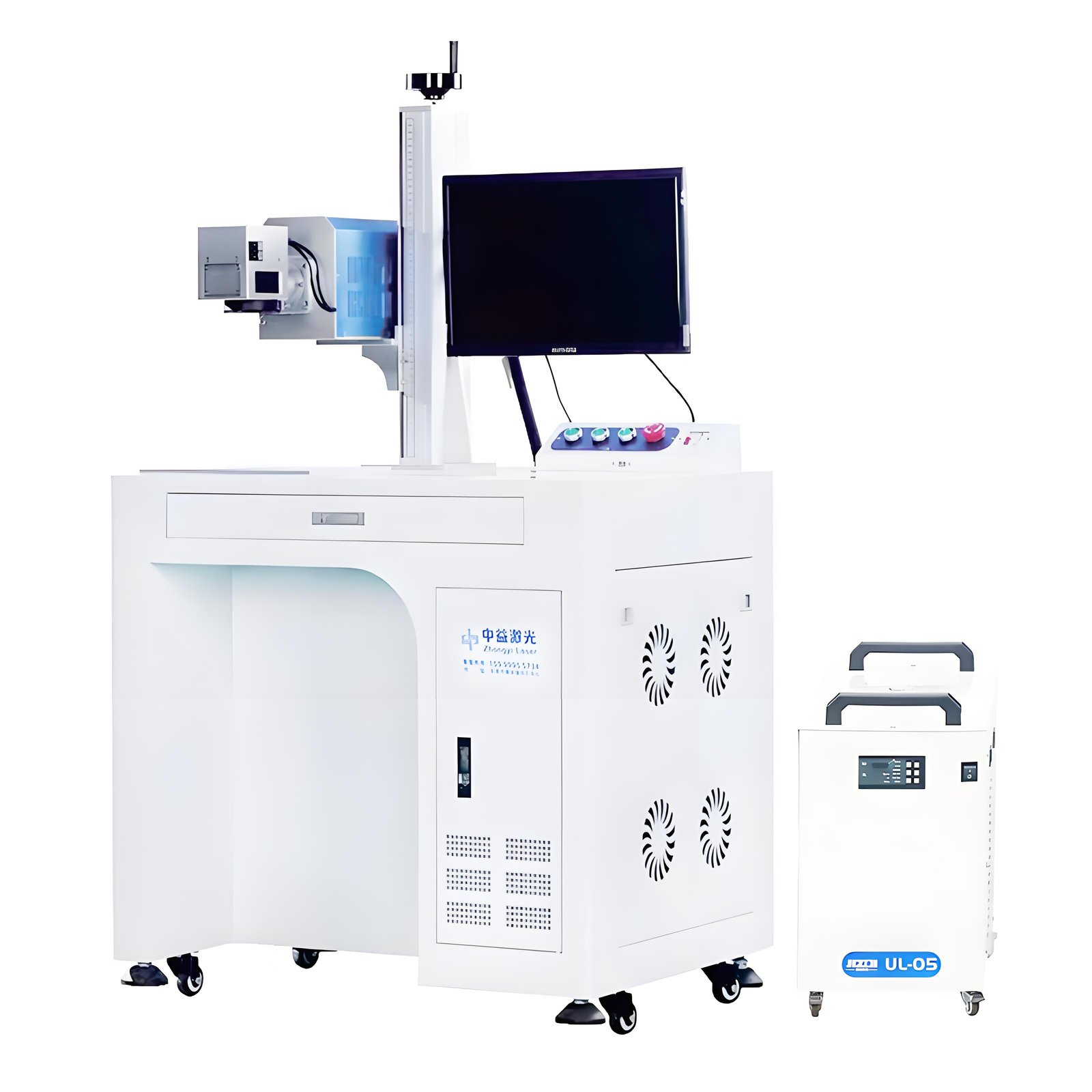
A CO2 laser marker runs at 10.6 micrometres, strongly absorbed by organics such as wood, leather, paper, acrylic and rubber, marking by vaporisation or charring. Acrylic processed by CO2 melts and re-solidifies, leaving a smooth edge that keeps its clarity - something UV actually cannot match. We supply CO2 at 30, 60 and 100 W with custom large-format tables and fixtures.
The answer and the process detail
To be precise: CO2 colour comes from the material's own thermal reaction - the milky white of melted acrylic, the browning of some boards - not from an arbitrary colour the machine can choose. True colour fill is normally done by filling after marking, or by using boards designed for colour marking. CO2's real strength on acrylic is the polished, light-transmitting cut edge. To know what your sheet will do, send a sample.
How to set it up and verify it
Charring is a function of temperature and dwell time. To reduce it, raise speed, lower power percentage and cut the number of passes so heat cannot spread sideways, and use air assist to carry smoke away before it chars a second time. For depth layering use grayscale mapping: run a grayscale test strip first to calibrate the value-to-depth relationship, then fire by level, otherwise the layers blur together. Materials containing carbon black or sulphur need proper fume extraction.
Selection and delivery
30 W suits fine marking on thin stock such as paper and leather, 60 W balances throughput and format, and 100 W handles deep engraving and full-sheet large-format work. Genuine and synthetic leather, and boards of different density, char very differently and must be calibrated separately rather than copying parameters. For full-sheet work also confirm flat-field correction of the lens so you do not get deep centre and shallow edges. Full specifications and buyer Q&A are on the CO₂ Laser Marking Machine page.
Procurement Q&A
Open Mo–Su 08:00–23:00 (GMT+8) with English support. Reach us at +86 159 9995 5734, WhatsApp +86 190 9874 6815 or Laurie@laserdg.com. Machines are packed to export standards.
We have 3+ engineers, 7+ authorised patents and 5000+ units shipped. Standard parts like laser source and galvo are stocked long-term for predictable replenishment.
Price depends on the model (UV / fiber / CO₂), power, laser-source brand (Raycus / JPT / IPG) and configuration (galvo, field lens, control software). Zhongyi Laser lists the exact laser-source and galvo models on the quote and in the contract, so the configuration is verifiable and easy to reorder or replace later.
Standard machines ship in 7 days; rush orders in 3–5 days; custom non-standard builds in 15–30 days. Before production we confirm drawings, process and sample results to avoid rework.
18-month warranty on the machine. Core parts like the laser source and galvo are replaceable standard parts with long-term supply, so repairs and swaps are documented.
Yes. Send a sample and we return a real test video within 24 hours and ship the part back. Key models get a 48-hour aging test, so you see the actual result on your own workpiece before deciding.
To be precise: CO2 colour comes from the material's own thermal reaction - the milky white of melted acrylic, the browning of some boards - not from an arbitrary colour the machine can choose. True colour fill is normally done by filling after marking, or by using boards designed for colour marking. CO2's real strength on acrylic is the polished, light-transmitting cut edge. To know what your sheet will do, send a sample.
Laser marking adds nothing - no ink, no solvent - which is its advantage over printing. Whether the charred layer affects food contact safety depends on the regulation in your market and on the degree of charring; that has to be tested, not verbally guaranteed by a machine supplier. The sensible route is to mark samples and have a third party run migration or sensory testing against your target market's food contact standard, then rely on the report.
Yes, by grayscale layering: the artwork is converted so darker areas receive more passes and lighter areas fewer, creating stepped depth that reads as embossing. The critical step is running a grayscale test strip first to calibrate the value-to-depth mapping, otherwise the levels blur together. Genuine and synthetic leather char differently and must be calibrated separately. Our 30, 60 and 100 W CO2 units all support layered marking.